Sustainability in our nursery school

Sustainability
Our commitment to sustainability
At Chestnut Nursery School, we believe that caring for the environment begins early. Our commitment to sustainability is integral to everything we do. We embrace the four pillars of sustainability: Decarbonization & Net Zero, Adaptation & Resilience, Biodiversity & Nature, and Climate Education & Engagement. These principles guide our ongoing sustainability journey and influence our initiatives.
We are a Plastic Free Nursery School and have a commitment to reducing our single-use plastics and embracing more eco-friendly resources and solutions. We have developed a comprehensive Climate Action Plan that ensures we are actively contributing to sustainability and providing education on these vital topics. As a nursery, we focus on nurturing a sense of environmental responsibility in our children, encouraging them to value and care for our planet in age-appropriate ways.
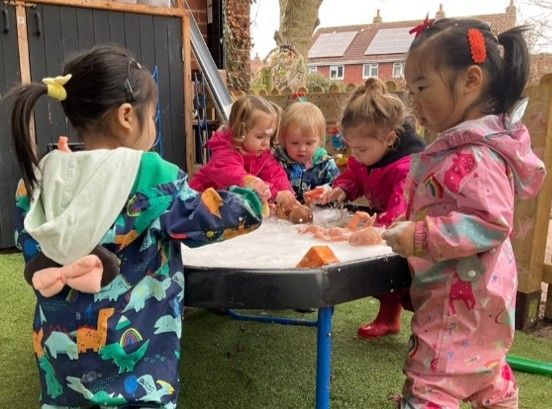
We believe in hands-on learning experiences, whether within our nursery, in our gardens, or beyond them. Through interactive activities, we teach our children and families to appreciate nature and understand the importance of protecting our environment for future generations.
Activities that we do to support our commitment to sustainability:
Forest School
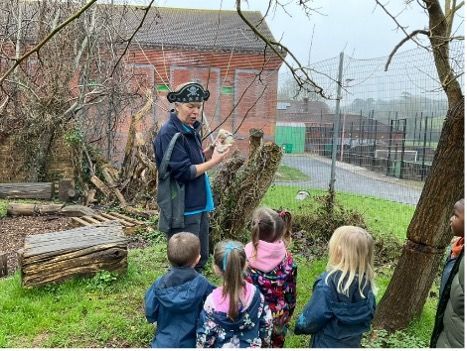
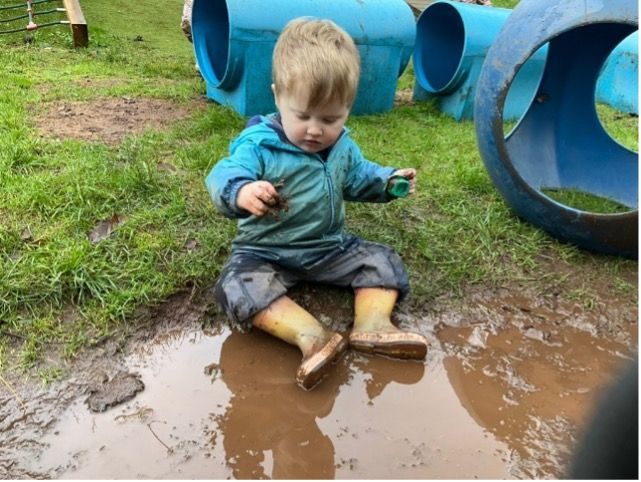
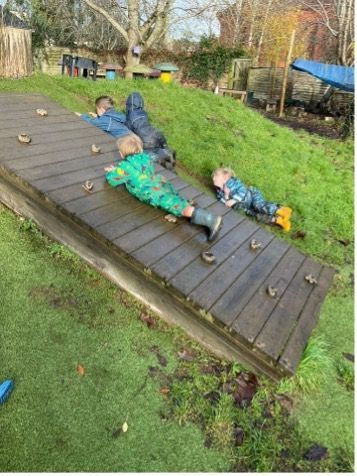
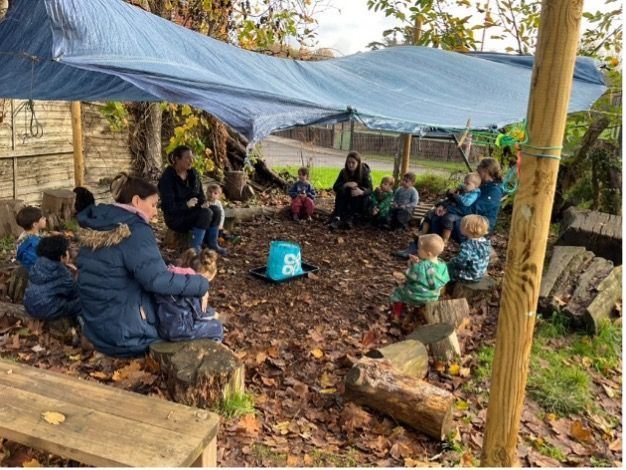
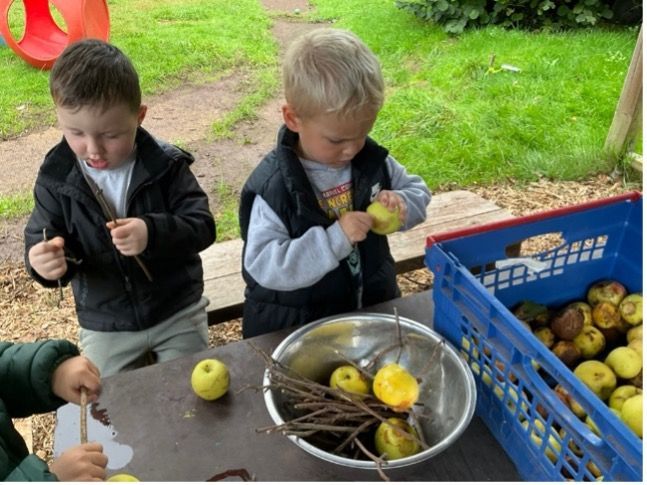
Forest School is an integral part of our nursery school curriculum and takes place in our Apple Garden. The Apple Garden is a safe and diverse natural outdoor area in which the children can play, explore and discover, take risks and learn. The site has a variety of trees, plants, play equipment, a wooden shelter and a fire bowl clearing.
The children at Chestnut Nursery School have access to Forest School each week, the whole year round. This gives them a full sense of the different seasons and the changes the seasons bring through changes in flora, fauna and weather.
The activities at Forest School promote an appreciation of the natural world and encourage the children to gain a connection to the world around them. The activities also help the children to develop their social and emotional skills, build self-confidence and resilience.
Some examples of the types of activities we do at Chestnut Nursery School Forest School are:
- Safe use of fire and cooking outside
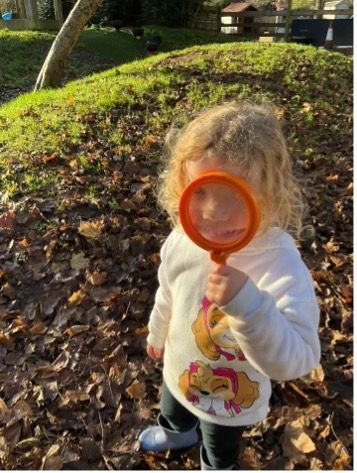
- The identification of plants and animals
- The exploration of the natural world and how to look after it
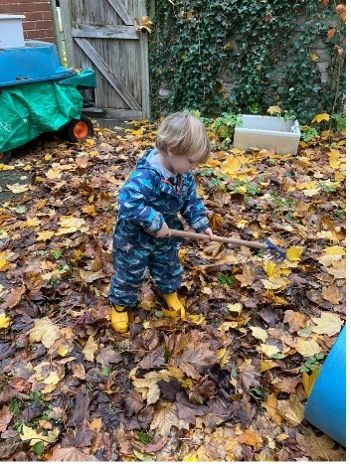
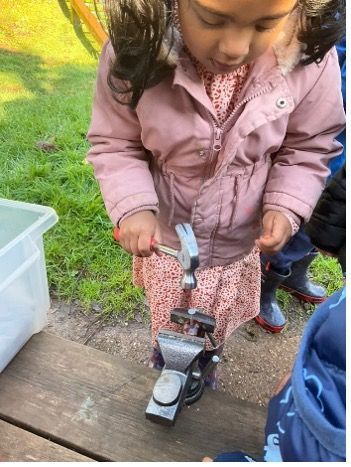
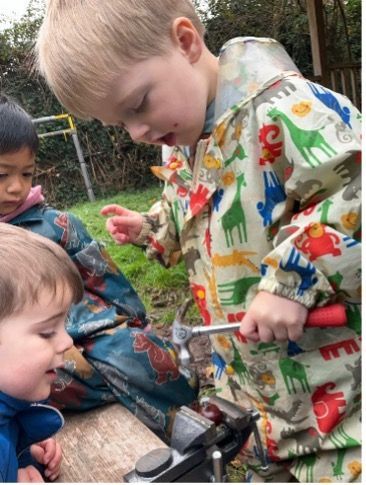
- The safe use of simple tools
- Noticing seasonal changes
- Developing social and emotional skills by working as a community
- Playing in the outdoors and using natural props
- Safe risk taking
- Den building
Composting, worms and waste management
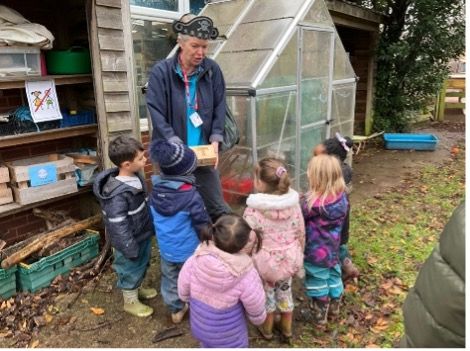
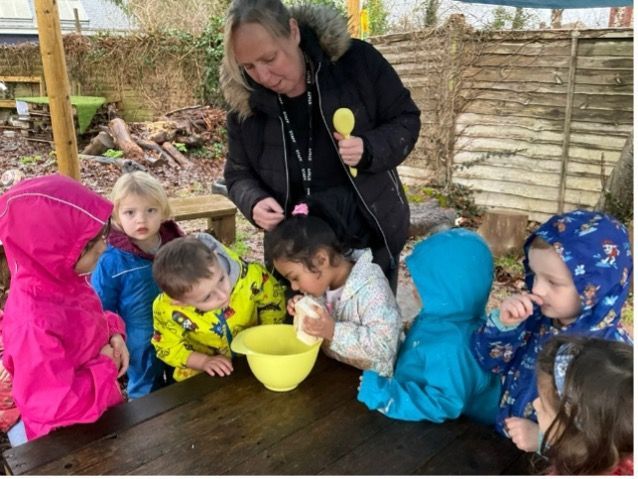
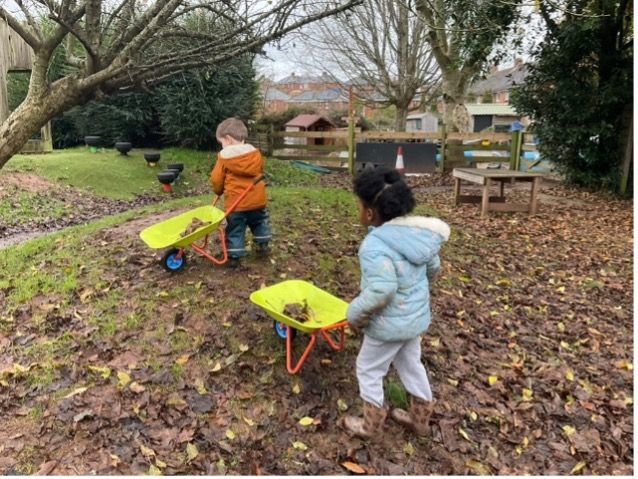
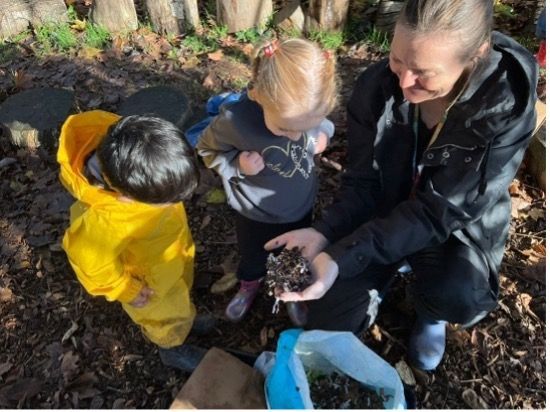
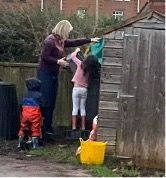
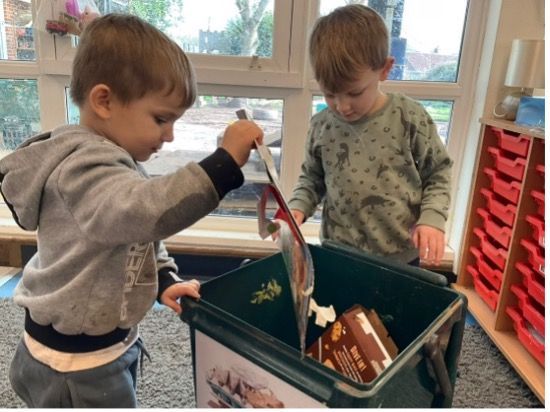
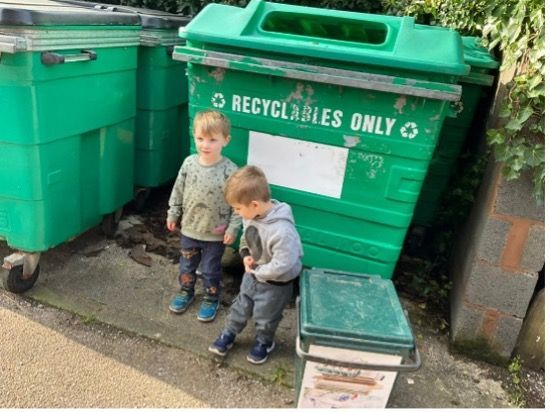
We include our children in the effective composting and waste management systems that we have in place. In the nursery garden we have two compost bins and a worm farm, which play a vital role in reducing food waste. Each week, our children actively engage in this process by taking responsibility for food waste generated during snack and lunch times. They carefully sort through this waste and place organic materials into the compost bins. Additionally, we talk about the importance of recycling and use designated recycling bins which the children enjoy taking outside to the big recycling wheelie bins. By involving the children in these sustainable practices, we are fostering a sense of responsibility and environmental stewardship in the next generation. Our commitment to composting and effective waste management not only reduces our ecological footprint but also serves as an educational tool for our community.
Clothes recycling/ Resources recycling
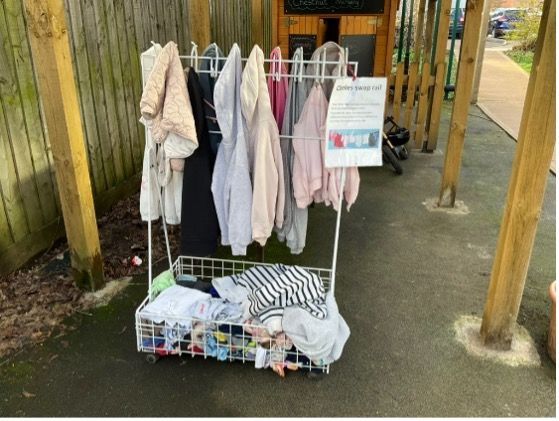
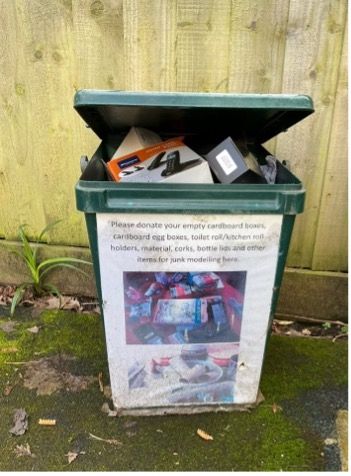
We invite families to collect and donate their clean cardboard waste, which we repurpose for various craft projects and junk modelling activities. In our efforts to further minimize waste, we use the scrap store to give new life to dicarded items, thereby enhancing our creative projects. Additionally, we have established a clothing stand where families can share their unwanted garments, preventing these items from ending up in landfills. This initiative not only supports environmental sustainability but also provides an opportunity for other children to benefit from pre-loved clothing. We encourage our community to participate actively in these initiatives to foster a culture of recycling and resourcefulness.
Planting
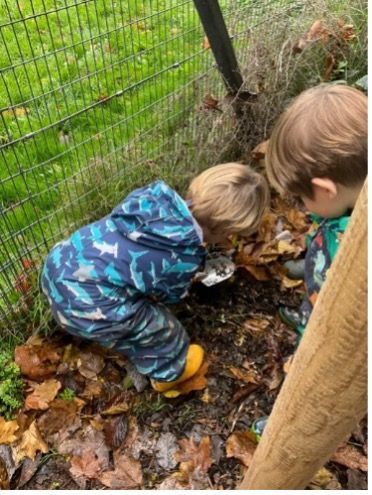
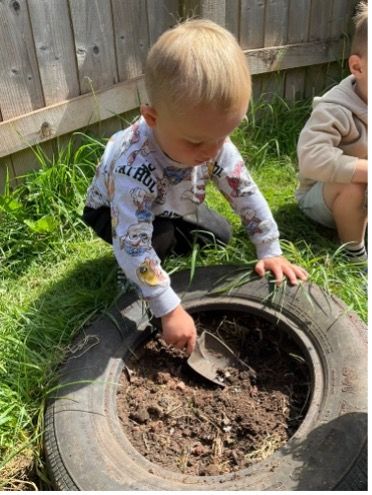
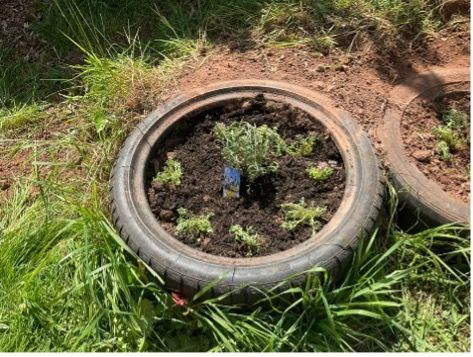
We are dedicated to fostering biodiversity and creating natural habitats within our garden. As part of this commitment, the children regularly participate in the planting of various plants and saplings. We are fortunate to have received a generous donation from the Woodland Trust, which included saplings aimed at establishing a natural border in our Apple Garden. This initiative will not only enhance the aesthetic appeal of the area but will also serve to provide essential habitats for wildlife, offer screening, and support drainage – so important during our wet season!
Gardening club
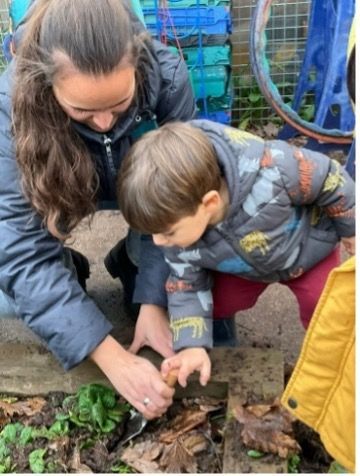
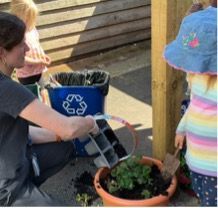
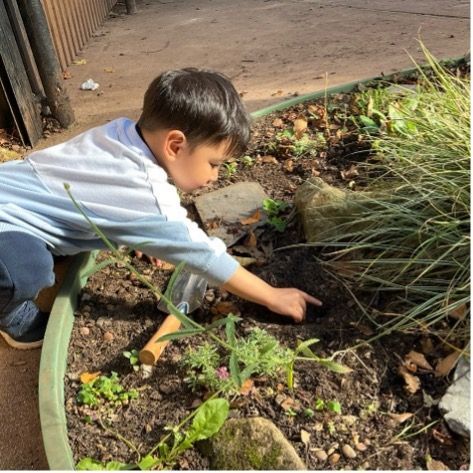
Each half-term we invite our parents to join us with their children at our after-school Gardening Club. During our sessions, we focus on a variety of essential gardening tasks, including weeding, preparing planting beds, cutting back small plants, and planting a range of flowers and vegetables. The children take great pride in showcasing their efforts and the fruits of their labours to their peers. This experience not only nurtures their gardening skills but also instils a sense of ownership and responsibility towards our nursery school environment.
Community Litter Picks
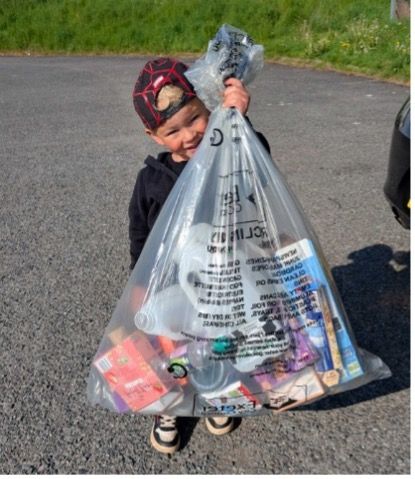
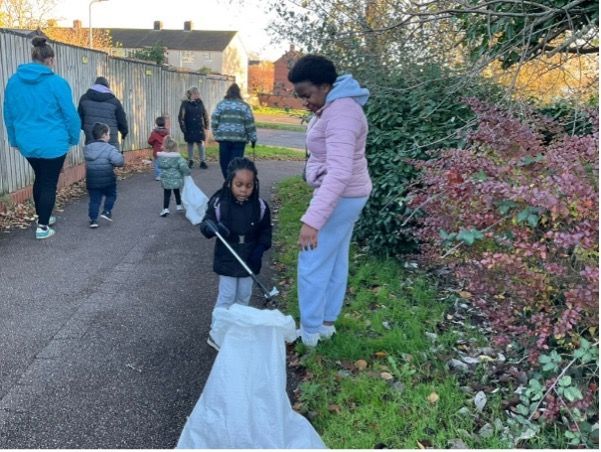
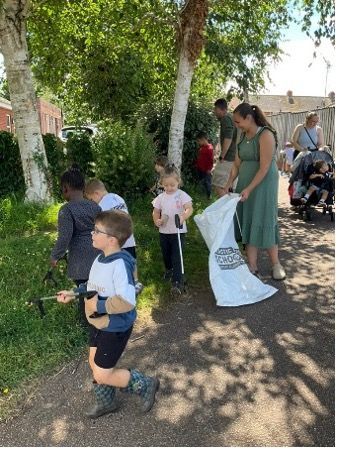
Each half term we invite our children and parents to join us in a community litter pick. The sessions take place in the immediate environment outside of nursery school. Our families help to pick up the plastic litter to stop it from entering our waterways and soil, thereby safeguarding the environment for future generations. The sessions help to promote a love and value of local environment and encourage the children to want to look after their neighbourhood and keep it clean and tidy.
Outside speakers
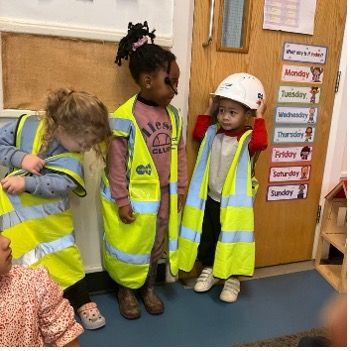
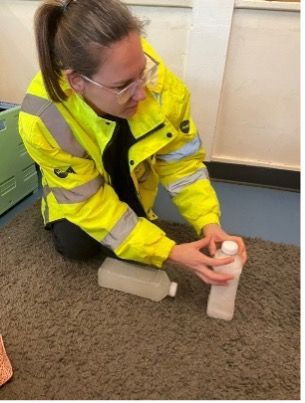
Each year we invite people from outside of nursery school to come in and hold educational workshop sessions with the children. We utilise their educational knowledge and skills to create collaborative opportunities for the children. The visits help to provide exciting experiences for our children to learn about a sustainable future.
We have enjoyed visits from Resource Futures and South West water.